
Digital Advertising Insights · Web Insights · Mobile App Insights · Audience Insights · Eve Chen · October 2026
The Wearables Boom: Market Trends and Future Growth
Sensor Tower's State of Wearable Technology 2026 report explores the markets, brands, audiences and digital marketing strategies shaping this evolving ecosystem.
As smartwatches, fitness bands and smart rings become part of everyday health and fitness routines, companion apps are playing an increasingly central role in the wearable experience. Beyond device setup, these apps deliver personalized health insights, support daily engagement and enable different business models.
In Q1–Q3 2026, wearable technology apps generated 244 million downloads worldwide, while in-app purchase (IAP) revenue grew 30% to $139 million. Sensor Tower's State of Wearable Technology 2026 report explores the markets, brands, audiences and digital marketing strategies shaping this evolving ecosystem.
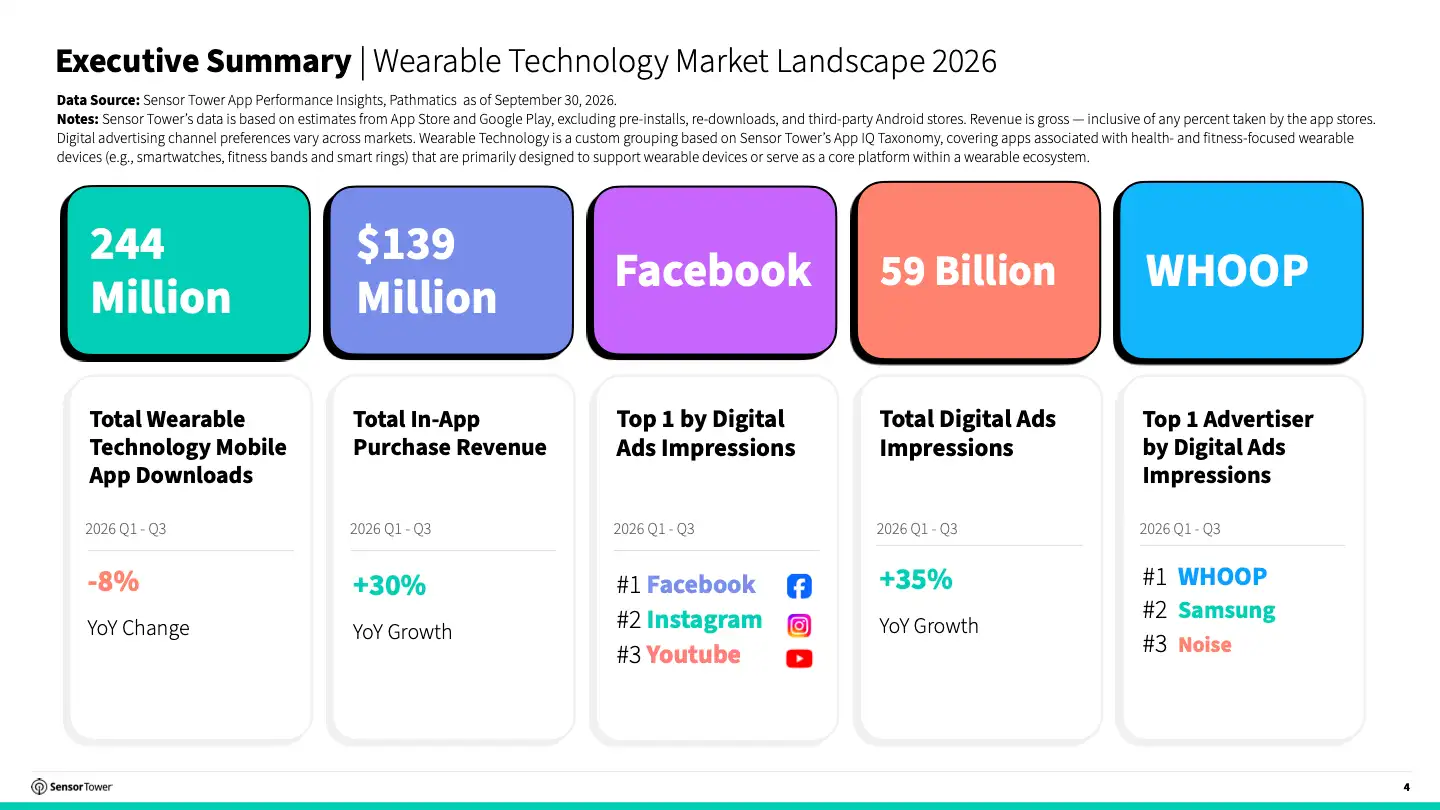
Note: Wearable Technology is a custom grouping based on Sensor Tower's App IQ Taxonomy, covering apps associated with health- and fitness-focused wearable devices (e.g., smartwatches, fitness bands and smart rings) that primarily support wearable devices or serve as core platforms within wearable ecosystems. Smart glasses and audio devices are excluded. App downloads and IAP revenue are Sensor Tower estimates from the App Store and Google Play, excluding pre-installs, re-downloads and third-party Android stores. IAP revenue excludes transactions outside app stores. Revenue is gross — inclusive of any percent taken by the app stores.
Wearable Apps Enter a New Phase of Monetization
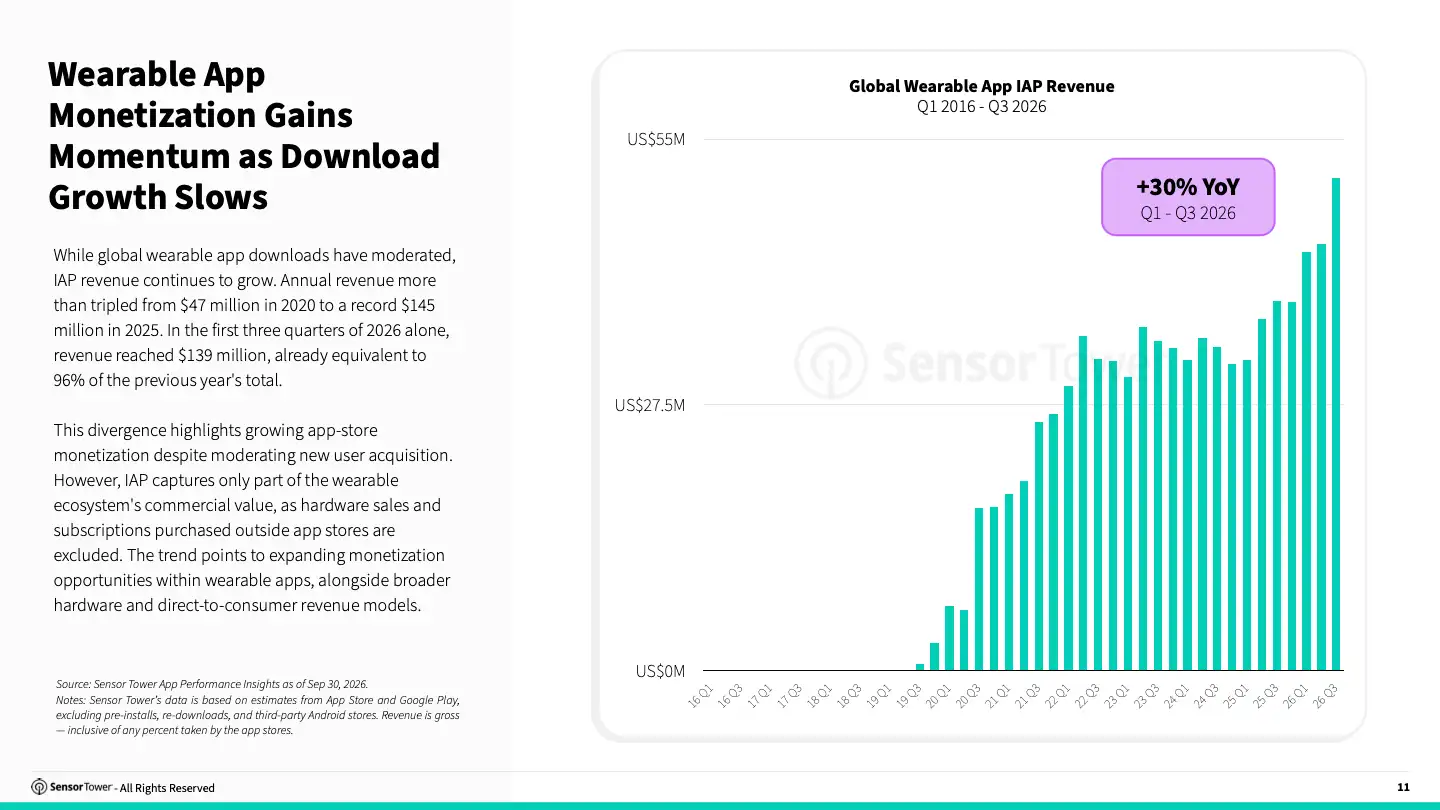
Global wearable app downloads grew about 6.6 -fold from 2016 to 2025, but growth has moderated since late 2023. Meanwhile, IAP revenue continues to rise, with the first nine months of 2026 already reaching 96% of the full-year 2025 total. This divergence highlights growing app-store monetization even as new user acquisition slows.
Regional differences are equally pronounced. India led all countries with almost 50 million wearable app downloads in Q1–Q3 2026, while the US generated US$85.4 million in IAP revenue, accounting for nearly 60% of the global total. The report examines how different markets contribute to user acquisition and app-store revenue.
Without a Screen, the App Becomes the Product
Samsung Health, Mi Fitness and Garmin Connect led global wearable apps by monthly active users (MAU) in Q1–Q3 2026. Meanwhile, smart rings and screenless fitness bands are placing greater emphasis on companion apps as the primary interface for personalized health insights.
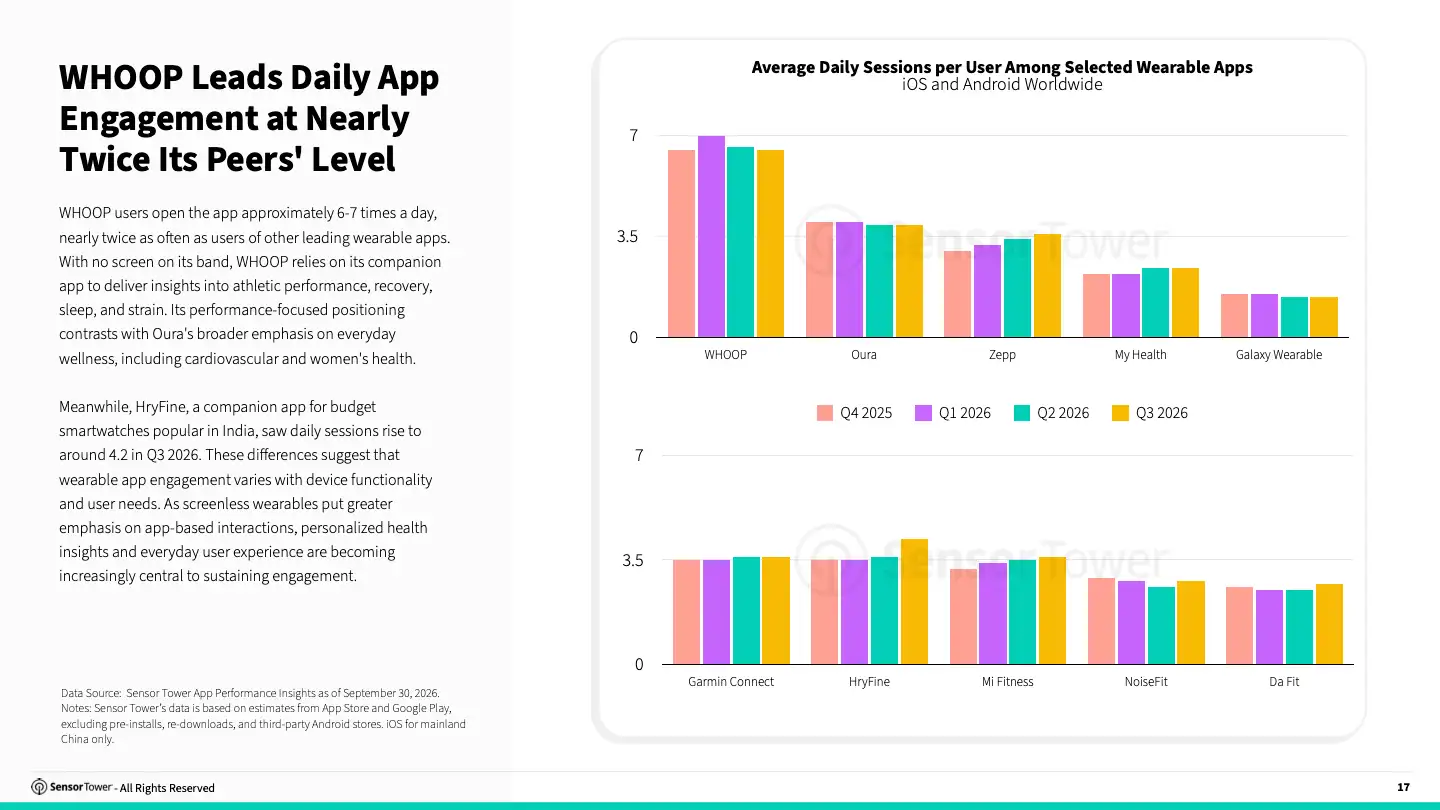
WHOOP illustrates this shift, with users opening its app nearly seven times a day, roughly twice as often as users of other leading wearable apps. While WHOOP emphasizes athletic performance and recovery, Oura focuses on longer-term health monitoring, including cardiovascular and women's health. Their membership-based models contrast with Samsung and Ultrahuman, which offer core smart ring health insights without mandatory subscriptions.
As brands compete beyond hardware, personalized insights and everyday app experiences are becoming increasingly important to wearable differentiation and ongoing engagement.
Each Brand Builds a Distinct Audience
Wearable apps attract different audiences across health and lifestyle needs. Nearly 74% of WHOOP users are male, compared with Oura's 53% female majority, reflecting distinct audience profiles across performance-focused and broader wellness-oriented ecosystems.
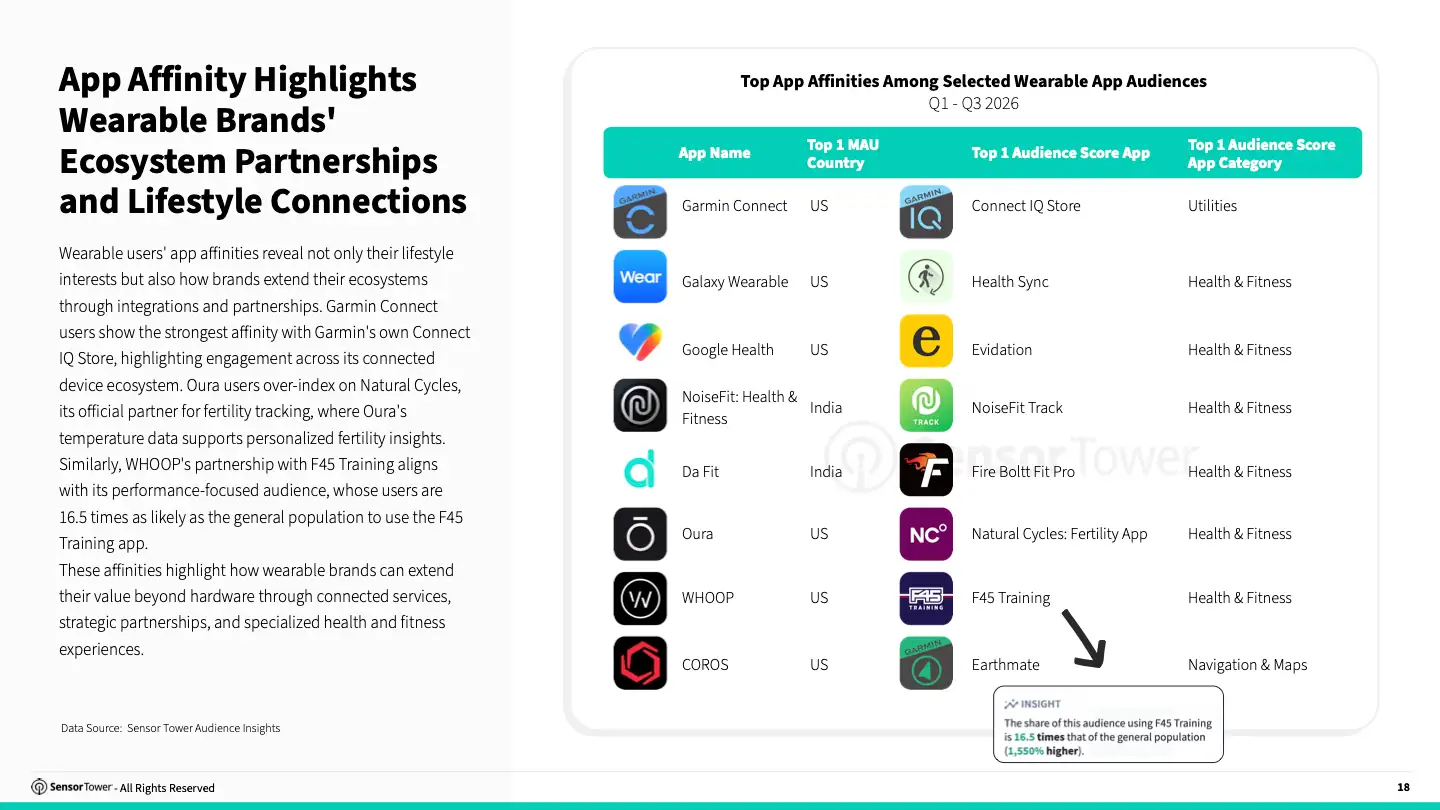
App affinities reveal further connections. Oura users show strong affinity with Natural Cycles, its official fertility-tracking partner, while WHOOP users are 16.5 times as likely as the general population to use F45 Training, a fitness brand WHOOP has collaborated with. Garmin Connect users also show strong affinity with Garmin's Connect IQ Store, highlighting engagement across the brand's wider ecosystem.
These patterns illustrate how wearable brands are serving distinct consumer needs through specialized health experiences, partnerships and connected app ecosystems.
From Social Media to ChatGPT, Wearable Brands Expand Digital Discovery
Wearable brands generated 59 billion digital ad impressions in Q1–Q3 2026, up 35% year-on-year, as quarterly advertising spend surpassed US$100 million.
Alongside established social and video channels, WHOOP, Oura, Xiaomi, RingConn and Samsung advertised on ChatGPT in 2026. ChatGPT also accounted for 3.1% of RingConn's website referral traffic, highlighting its potential as an additional product discovery channel alongside traditional marketing platforms.
Get the Full Report
The full report explores leading wearable apps, regional advertising strategies, seasonal campaigns and brand case studies on Oura, Ultrahuman and Zepp. Download Sensor Tower's State of Wearable Technology 2026 for the complete findings.
Sensor Tower provides mobile app, digital advertising and audience intelligence to help you stay ahead of market shifts, outperform competitors and drive sustainable growth. Contact us to request a product demo:
This article was written by Eve Chen, Insights Analyst, APAC at Sensor Tower, and authorised by Nan Lu, VP of Marketing, APAC. Please credit Sensor Tower if you wish to reprint or share this content.
Sensor Tower – Your Guide to Global Mobile App Growth
Press Inquiries: press-apac@sensortower.com
Business Inquiries: sales@sensortower.com
Reproduction Notice: Please credit Sensor Tower as the source if you share or republish this content.
